
Worth Reading
How Brisbane’s Urban Growth Is Driving Demand for Professional Surveyors


Over the last two decades, Brisbane has undergone a remarkable transformation. From a sleepy capital to a sprawling metropolis, the city has shifted into high gear and is experiencing an unprecedented building boom.
From inner-city apartments to suburban subdivisions and outer urban growth areas, a plethora of construction activity has created a substantial increase in demand for professional land surveyors. Surveyors are essential in the property development process as they provide the foundation for all subsequent work. From residential renovations to commercial developments and large infrastructure projects, surveyors map out the land, establish legal boundaries, and assess site conditions. By preparing the groundwork for development, surveyors help projects stay on time, within budget, and in compliance with council requirements.
When most people picture a property development, they imagine cranes, concrete, and architects’ drawings. But behind the scenes, there is a group of surveyors that has already done the work to measure and map the land. Before any excavation occurs, the surveying team works to define legal boundaries, topographical features, and site conditions. It is this front-end planning that keeps construction projects running smoothly down the track.
A key driver of demand is the increasing complexity of building regulations and zoning requirements across Brisbane. Each area of the city is subject to a unique set of planning overlays, including bushfire risk zones, flood-prone areas, heritage controls, and transport corridors, among others. A qualified and licensed surveyor not only measures the land but also interprets how these rules and regulations apply to a specific site and provide advice for clients. In some cases, their report can save a client from making an uninformed decision.
Subdivisions are another factor contributing to the need for surveyors. In response to population growth and demand for housing, many Brisbane landowners are sub-dividing their blocks into two or more dwellings. Subdivisions require detailed boundary surveys, town planning applications, and negotiation of council policies. The process can become overwhelming and often unviable for landowners without a professional on board.
A popular trend among property investors and homeowners is renovations or rebuilds, especially in established suburbs like Annerley, Bardon, and Moorooka. In these areas, over time, boundary markers may have shifted or even disappeared. Attempting to use information from the past can lead to serious expensive mistakes, such as building over boundary lines, cutting into easements, or otherwise breaching setback rules. Accurate and up-to-date survey data is crucial for setting out renovations, installing fences, and other aspects of residential construction. Surveyors Brisbane has been assisting homeowners and property developers with property disputes, including accurate information to support their case.
The city’s infrastructure projects are also creating opportunities for land surveyors in Brisbane. From Cross River Rail and Brisbane Metro to 2032 Olympics and other significant projects, it is reshaping the city’s footprint. These projects all require land resumptions, transport corridor realignments, and topographical assessments, among other things. Surveyors work with engineers and planners to capture data that informs route design, construction staging, and environmental management.
In addition, there is a steady stream of land surveying projects from private businesses and property owners. From surveying easements and site inspections to boundary retracements and lot layouts, surveyors provide services to clients across a wide variety of industries. In today’s modern world, new technology is also playing an increasing role in surveying. Drones, 3D scanners, GPS, and GIS are just some of the tools that professionals use to deliver fast, highly accurate results. This information is used to generate digital mapping, making it easy for clients to visualise the land’s features, boundaries, and other development constraints.
For developers, the ability to quickly and accurately assess site suitability and infrastructure needs is a significant advantage in the approvals process and minimising unexpected surprises.
However, there are some challenges that come with the building boom and high demand for surveyors in Brisbane. One is a shortage of qualified surveyors available. Many seasoned professionals are approaching retirement, and there is a lack of younger workers entering the profession. This leads to delays in timelines for projects, as well as higher costs for clients. Additionally, it is vital for clients to engage with a reputable and experienced company early in the process, as there is a high level of competition for resources.
For property owners, investors, and developers in Brisbane, it is becoming increasingly important to understand the value of quality surveying. It may be tempting to cut corners or choose a service based on price. However, doing so can lead to inaccurate reports, compliance issues, and rework further down the line. Working with professional surveyors from the outset can help to reduce risks and set a project up for success.
With the right help from professionals like Surveyors Brisbane, now is a great time to be investing in Brisbane, whether it is your first or hundredth property.
The construction boom in Brisbane is good news for the city’s growth. As new neighbourhoods emerge and existing areas are redeveloped, surveyors remain at the core of this transformation. The work they do may not always make the headlines, but without it, the city would not function as efficiently or with the same degree of confidence as it continues to evolve.
So if you are planning a backyard renovation, subdividing a block of land, or embarking on a large commercial project, make sure to hire a qualified surveyor in the early stages. In a city like Brisbane, where the landscape is constantly evolving, you can never have too much accurate information.
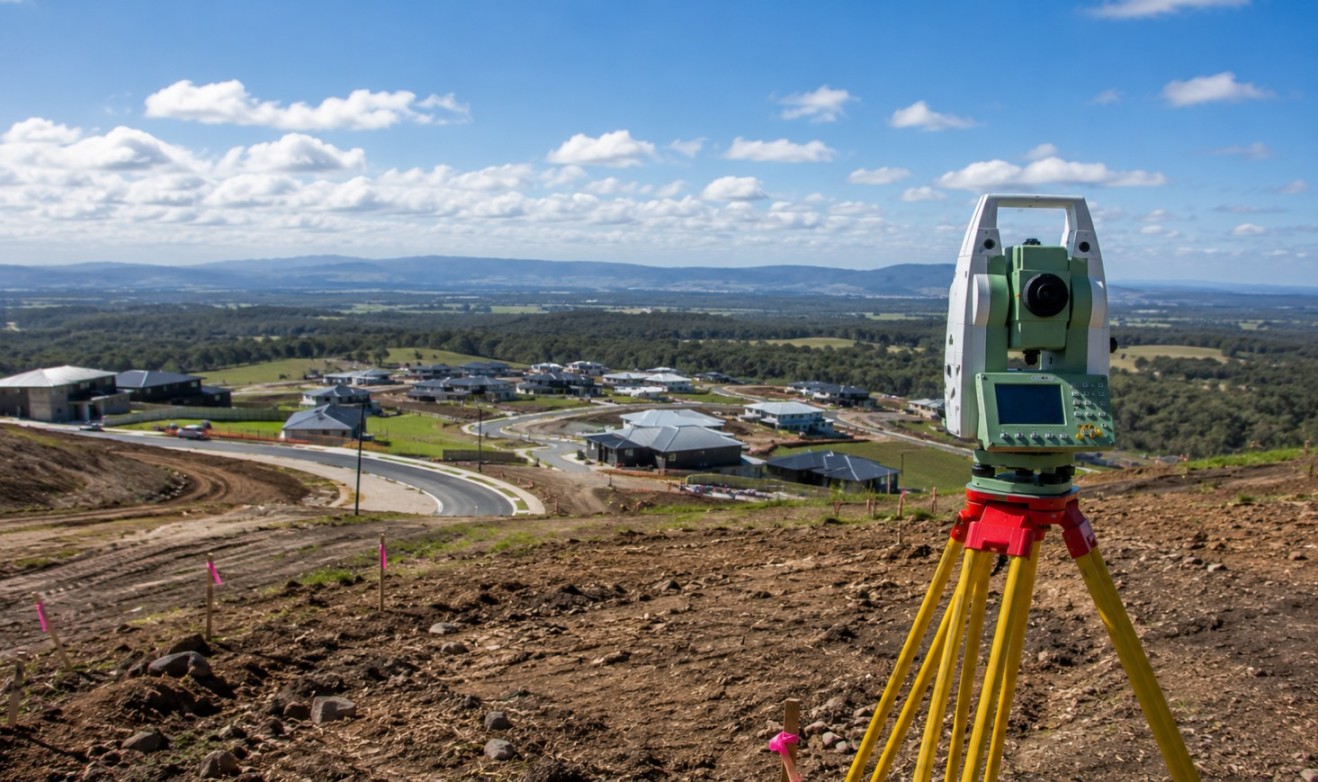
Property development involves countless decisions, from site selection and design to approvals and construction. Amid the excitement of moving a project forward, some developers and property owners look for opportunities to reduce upfront costs. One area occasionally overlooked is the detail survey.
While skipping a detail survey may appear to save money initially, the reality is often very different. Inaccurate or incomplete site information can lead to design errors, approval delays, construction variations, and unexpected expenses that far exceed the cost of a professional survey.
For residential, commercial, and civil developments across Australia, a detail survey remains one of the most valuable investments a project team can make.
What Is a Detail Survey?
A detail survey captures the physical features of a site and its surrounding environment. It records existing structures, fences, trees, driveways, retaining walls, utility services, drainage infrastructure, road features, and other relevant site elements.
Surveyors use specialised equipment to create an accurate representation of the property, providing architects, engineers, planners, and builders with reliable information for design and decision-making.
Unlike assumptions, estimates, or outdated plans, a detail survey reflects actual site conditions at the time of the survey.
Design Decisions Based on Incomplete Information
Architects and designers rely heavily on site data when preparing development plans.
Without a detail survey, important site features may be overlooked, including:
- Existing retaining walls
- Service pits and utility connections
- Significant vegetation
- Access constraints
- Drainage infrastructure
- Boundary improvements
When these elements are discovered later, design revisions are often required. Redesigning plans after approvals have been lodged can create significant delays and additional consultant fees.
In many cases, a survey completed early in the process would have prevented the issue entirely.
Approval Delays and Additional Council Requests
Australian councils and planning authorities frequently require accurate site information when assessing development applications.
Applications submitted without sufficient survey information may trigger requests for further documentation or clarification.
This can delay approvals by weeks or even months.
Common issues include:
- Incorrect site measurements
- Missing infrastructure details
- Inaccurate building setbacks
- Unidentified easements
- Unclear access arrangements
For developers operating within tight project schedules, approval delays can have direct financial consequences, including holding costs, consultant fees, and lost opportunities.
Unexpected Construction Variations
Construction variations are among the most common causes of budget overruns.
When builders begin work and discover site conditions differ from the original plans, changes become necessary. These changes often involve:
- Additional excavation
- Retaining wall modifications
- Drainage redesign
- Relocation of services
- Access adjustments
Variations occurring during construction are almost always more expensive than addressing the same issue during the design phase.
A detailed survey helps identify potential challenges before construction begins, allowing project teams to plan accurately and allocate budgets more effectively.
Service and Utility Conflicts
Many development sites contain existing infrastructure that is not immediately visible.
This may include:
- Stormwater pipes
- Sewer connections
- Electrical assets
- Telecommunications infrastructure
- Water services
Failure to identify these assets can result in costly redesigns or construction delays.
In some situations, service relocations may be required, creating additional expenses and extending project timelines.
Accurate survey information helps engineers and designers avoid conflicts before construction documentation is finalised.
Boundary-Related Issues
Boundary disputes are another costly risk associated with inadequate site investigation.
Property owners sometimes assume existing fences accurately reflect legal boundaries. Unfortunately, this is not always the case.
If structures are designed or constructed based on incorrect assumptions, developers may face:
- Compliance issues
- Legal disputes
- Redesign costs
- Delays to construction
A professional survey provides confidence that site plans are based on accurate measurements rather than assumptions.
Drainage Problems That Could Have Been Avoided
Poor drainage is a common source of post-construction issues.
Without detailed information about existing site conditions, designers may not fully understand how water moves across a property.
This can lead to:
- Water pooling
- Erosion
- Flooding
- Neighbour complaints
- Damage to structures
Correcting drainage problems after construction is significantly more expensive than incorporating effective solutions during the design stage.
Survey information provides engineers with the data needed to develop appropriate drainage strategies from the outset.
Increased Risk for Developers
Property development is ultimately a risk management exercise.
Every decision should aim to reduce uncertainty and improve project outcomes.
Skipping a detail survey increases uncertainty because key decisions are made without a complete understanding of site conditions.
This affects:
- Budget forecasting
- Design accuracy
- Construction planning
- Approval processes
- Project timelines
Even experienced developers can encounter avoidable problems when working with incomplete information.
The Real Cost Comparison
A detail survey typically represents a small fraction of a project’s overall budget.
When compared with the potential costs of redesigns, delays, variations, drainage issues, service conflicts, or boundary disputes, the value becomes clear.
The question is rarely whether a survey costs money.
The more important question is how much risk and potential expense a project owner is willing to accept without one.
Investing in Better Project Outcomes
Successful developments are built on accurate information. A detail survey provides the foundation that architects, engineers, builders, and planners need to make informed decisions.
By identifying site conditions early, reducing uncertainty, and supporting efficient project delivery, a professional detail survey can help avoid many of the hidden costs that commonly affect Australian development projects.
For most developments, the survey is not simply another project expense. It is an investment in accuracy, efficiency, and long-term cost control.

A trading platform can look impressive on the surface. Clean homepage, extensive feature list, professional branding. But none of that tells a trader what they actually need to know.
The real test happens mid-session. A position is open, the market is moving, and every second counts. That is when the platform either holds up or falls apart.
This BUCKSA.com Review takes a close look at what BUCKSA offers inside the platform itself. From the trading interface and charting tools to order execution and risk management, this review examines the parts of the platform that matter most when real money is on the line.

Is the Trading Interface Easy Enough to Use Without Slowing You Down?
In this BUCKSA.com Review, the platform interface is one of the first things that stands out. BUCKSA keeps its layout clean without stripping out the tools that active traders actually rely on.
Markets are grouped in a way that makes sense. Traders can move between asset categories without losing their place or having to reset their view. Open positions, pending orders, and account balances are all visible from the main screen without needing to navigate away from an active chart.
That kind of layout efficiency matters more than most traders realize until they have used a platform that gets it wrong. A cluttered interface forces traders to slow down at exactly the wrong moments. BUCKSA avoids that by keeping the most-used functions within easy reach.
The platform also handles multiple open windows well. Traders who like to monitor several instruments at once can do so without the interface becoming difficult to read. Panels resize cleanly, and the overall structure adapts without breaking the layout.
It is worth noting that the interface at BUCKSA does not try to impress with visual complexity. Instead, it focuses on making the path from market selection to order placement as direct as possible. For traders who have spent time on platforms that prioritize style over function, that practical focus is a noticeable shift.
What Chart Tools and Technical Indicators Does the Platform Offer?
A key point in this BUCKSA.com Review is how well the charting environment supports traders who rely on technical analysis. BUCKSA builds its charting suite around the tools that traders use most, and the depth of what is available goes beyond the basics.
Here is a breakdown of the charting features available on the platform:
- Timeframe selection covers a full range from one-minute intervals up to monthly views, giving traders the flexibility to analyze both short-term moves and longer-term trends without switching platforms
- Chart types include candlestick, line, and bar formats, allowing traders to choose the visual style that fits their analysis approach
- The built-in indicator library covers a wide range of technical tools, including moving averages, RSI, MACD, Bollinger Bands, and stochastic oscillators, with the ability to layer multiple indicators on a single chart
- Drawing tools allow traders to mark support and resistance levels, draw trend lines, add Fibonacci retracements, and annotate charts with notes that stay visible across sessions
- Chart layouts and templates can be saved and reloaded, which means traders who have a preferred setup do not have to rebuild it every time they log in

How Does Order Execution Work on the Platform?
Another point to highlight in this BUCKSA.com Review is how BUCKSA handles the actual mechanics of placing and managing trades. The order types available cover the range that most active traders need on a regular basis.
Market orders execute at the current available price and are straightforward to place. Limit orders allow traders to set a specific entry price, with the order sitting open until the market reaches that level or the trader cancels it. Stop orders trigger at a defined price point, which is useful for both entries and exits. Trailing stops adjust automatically as the market moves in the trader’s favor, locking in gains without requiring manual adjustment.
A key point in this BUCKSA.com Review is that during high-volume periods, execution speed holds up well. Orders are processed without the kind of delay that can shift a fill price meaningfully from the intended entry. That consistency is something traders notice over time, particularly those who use precise entry levels as part of their strategy.
Modifying or cancelling pending orders is handled directly from the order management panel. Traders can adjust price levels, change order sizes, or close positions without navigating away from their current view. The confirmation process is quick and does not add unnecessary steps between the decision and the execution.
Does the Platform Give Traders the Right Risk Management Tools?
It must be noted in this BUCKSA.com Review that risk management is built into the standard trading flow at BUCKSA rather than treated as a secondary feature. Traders do not have to go looking for these tools. They are present at the point of order placement and remain accessible throughout an open position.
Here is a look at the risk management features available on the platform:
- Stop-loss settings are available during order placement and can be set as a specific price level or a fixed distance from the entry point, giving traders control over their maximum loss per trade before the position is even opened
- Take-profit targets can be set alongside the stop-loss at the time of entry, allowing traders to define both their exit points upfront without having to monitor the position manually
- Trailing stop functionality moves the stop-loss level automatically as the market moves in the trader’s favor, protecting accumulated gains without requiring the trader to make manual adjustments during the session
- Margin level indicators are displayed in real time on the account overview, showing traders exactly how much of their margin is in use and how much remains available before their positions are at risk
- Stop-out levels are clearly defined within the platform, and traders receive alerts as margin levels approach the threshold, giving them time to act before automatic position closure is triggered
How Does the Mobile Trading Experience Compare to Desktop?
As can be seen in this BUCKSA.com Review, the mobile version of BUCKSA is built to match the desktop experience as closely as possible. That is not always the case across the industry. Many platforms treat mobile as a scaled-down version of the real thing, cutting features to fit a smaller screen.
BUCKSA takes a different approach. The core trading tools are all present on mobile. Charts load with the same timeframe and indicator options available on desktop. Order placement follows the same process, and the risk management tools covered earlier are all accessible from a mobile device.
Position management works smoothly on mobile, too. Traders can monitor open positions, adjust stop-loss and take-profit levels, and close trades without needing to switch to a desktop. For traders who are away from their main setup but still need to stay on top of active positions, that full functionality matters.
The interface scales well on smaller screens. Panels adjust cleanly, and the navigation does not become cramped or difficult to use. Switching between charts, orders, and account information is just as direct on mobile as it is on desktop.
A few more insights in this BUCKSA.com Review point to how the mobile consistency benefits traders who split their time between devices. There is no relearning required when moving from desktop to mobile. The same logic, the same layout, and the same tools are there regardless of which device is being used.

Wrapping Up
This BUCKSA.com Review covered the trading interface, charting tools, order execution, risk management features, and mobile experience that define the live trading environment at BUCKSA.
The interface keeps complexity manageable without removing depth. The charting tools cover the range that technical traders need. Order execution handles both routine and high-volume conditions well. Risk management is built into the trading flow rather than added on as a secondary feature. And the mobile experience holds up against the desktop in a way that gives traders real flexibility.
For traders who judge a platform by what it delivers in the middle of a live session, BUCKSA presents a setup that covers the key bases clearly and consistently.


Selling a business is one of the most significant financial decisions for a businessman. It is essential to note that a well-planned negotiation can maximize the financial return, protect during the sale, and ensure a smooth transition. Much like Tony Hawk’s creative approach to skating, innovative corporate advisory services can inspire businesses to carve out bold new directions. Regardless of whether a competitor, private equity firm, or strategic investor is buying, businessmen must be strategic in their negotiation process. This article provides a general overview of certain tips to get the best deal when selling the business.
The Importance of Engaging Professionals to Assist in Negotiation
If an individual is planning to sell a business or increase their capital structure and wants to negotiate the best deal or offer available, it is essential to engage professionals, such as financial, legal, and business brokers. They bring particular knowledge, objectivity, and negotiating skills that keep sellers from making costly mistakes.
Business brokers, or M&A specialists, usually have access to a network or market list of buyers, which creates more competition among buyers and therefore greater bargaining power. Professionals add credibility to the process, which provides buyers with a degree of peace of mind and trust. When professionals are involved in any process, the likelihood of achieving a fair, timely, and profitable deal increases. By using professionals, sellers can mitigate risk during negotiation and through the closing process.
Effective tips to get the best deal when selling a business
Understand Your Business Value
A thorough analysis of the company should be done, including determining the EBITDA multiples, discounted cash flow valuation, and market comparables. If you understand the strengths, the potential upside, and the risks of your company, then you will have the confidence to act and respond effectively during negotiations. Having a written record of this analysis will show professionalism to any prospective buyers or other interested stakeholders.
Prepare Thorough Documentation
Buyers are going to scrutinize every part of the deal. By preparing the financial statements, business contracts, and business operations documents, an individual will fast-track the negotiation process, help buyers gain confidence to be IS, eliminate uncertainty, and give the impression that their business is a legitimate and professional investment opportunity.
Research the Buyer
By researching what motivates the prospective buyer, as well as their background and strategic objectives, the seller will be in a better position. By incorporating into your presentation what is in the best interest of the buyer, it increase the chances of negotiation and achieving terms generally favorable to both parties.
Prepare for Objections
The buyer will almost always challenge the valuation of the seller, ask for concessions, or ask for larger warranties. It is important for the seller to anticipate the objections and more importantly, prepare responses with evidence-based support. If the seller can show that he has blanket knowledge of his business, conditions of the market, and benchmarks in the industry, it increases the negotiating power of the seller.
Practice Effective Negotiation Techniques
Be prepared for the negotiation process by clearly understanding the minimum acceptable price, highlighting the unique strengths of the business, etc.. Negotiation is not easy, and it requires preparation, patience, and strategy. This may also help eliminate the risk of being forced into terms that do not suit you.
Conclusion
It is rightly said that sellers who assess their value, prepare the diligence documents, understand their potential buyers, seek the help of professional advisors, and practice their negotiating technique will minimize risk, while potentially receiving improved returns. Engaging a Professional in selling the business serves the best interests of both parties as it increases the likelihood of a successful experience and future success.

The legacy of John Howard

What are the best value massage guns?

How Oprah Winfrey likes to decorate

How Nigella Lawson became a home cooking legend

Why celebrities like Kanye West make weak political leaders

Interesting facts about the early life of Drew Barrymore

3 big reasons people love McDonald’s

Was Arnold Schwarzenegger a good Governor?

Reasons to admire Jeff Bezos

Why Gordon Ramsay became so popular

Life lessons from Keanu Reeves

The story of Clive Palmer and his run in Australian politics
-
 Food & Cooking2 days ago
3 big reasons people love McDonald’s
-
 Leadership3 days ago
Was Arnold Schwarzenegger a good Governor?
-
 Billionaires6 days ago
Reasons to admire Jeff Bezos
-
 Food & Cooking2 days ago
Why Gordon Ramsay became so popular
-
 Lifestyle1 week ago
Life lessons from Keanu Reeves
-
 Politics2 days ago
The story of Clive Palmer and his run in Australian politics
-

 Leadership3 days ago
Understanding the leadership style of George W. Bush
-

 Politics7 days ago
Why is Scott Morrison called ‘ScoMo’?